Rodent Control in Lakeland, FL
Scratching in the attic at night. Droppings along a garage wall. Something has chewed through a box in the pantry. In Lakeland, that usually means roof rats. They are Florida's big rodent problem, strong climbers that travel along palm fronds, fences, and power lines, drop onto roofs, and settle into attics where it is warm and quiet. House mice and Norway rats show up too, but the rat living above your ceiling in Polk County is most often a roof rat, and it is very good at staying there.
Same-day and next-day appointments, Mon–Sat
Swan City Pest handles rodents the way that actually ends the problem: get the animals out, then seal the home so new ones cannot follow. Trapping alone is a treadmill if the holes stay open. We inspect the roofline, attic, and foundation, show you the entry points we find, and lay out a plan for removal, exclusion, and cleanup. Your quote is confirmed free on the call, with same-day or next-day visits often available.
Know Your Rodent: Roof Rats, Norway Rats, and Mice
Roof rats are slim, dark, and built to climb. Citrus trees, palms, and thick vines against a house are highways straight to the roof, and Lakeland yards are full of all three. They nest in attics, wall voids, and garage clutter, and they are mostly active at night, which is why the first sign is usually sound. Norway rats are heavier, live lower, and burrow around foundations, sheds, and dense ground cover. They are more common near water, dumpsters, and older outbuildings than in attics.
House mice are small enough to slip through a gap the width of a pencil. They stay close to food, nesting in pantry walls, behind appliances, and in stored boxes. Droppings tell the story fast: roof rat droppings are longer and pointed, mouse droppings are small like grains of rice. Size and location guide the whole plan, so we identify what you have before setting a single trap.
- Roof rats: attic noises at night, palms and citrus nearby
- Norway rats: burrows near foundations and outbuildings
- House mice: tiny droppings near food and appliances
- Grease rub marks along beams, pipes, and regular runways
Why Sealing Entry Points Is the Real Fix
Here is the part many companies skip. A rat colony in your attic has a route in, and that route stays open for the next rats after these are gone. Common entries in Florida homes are gaps where the AC lines enter, open plumbing vents, torn soffit screens, space under garage doors, and holes where roof sections meet. A young rat can squeeze through an opening about the size of a quarter, so the gap that looks too small usually is not.
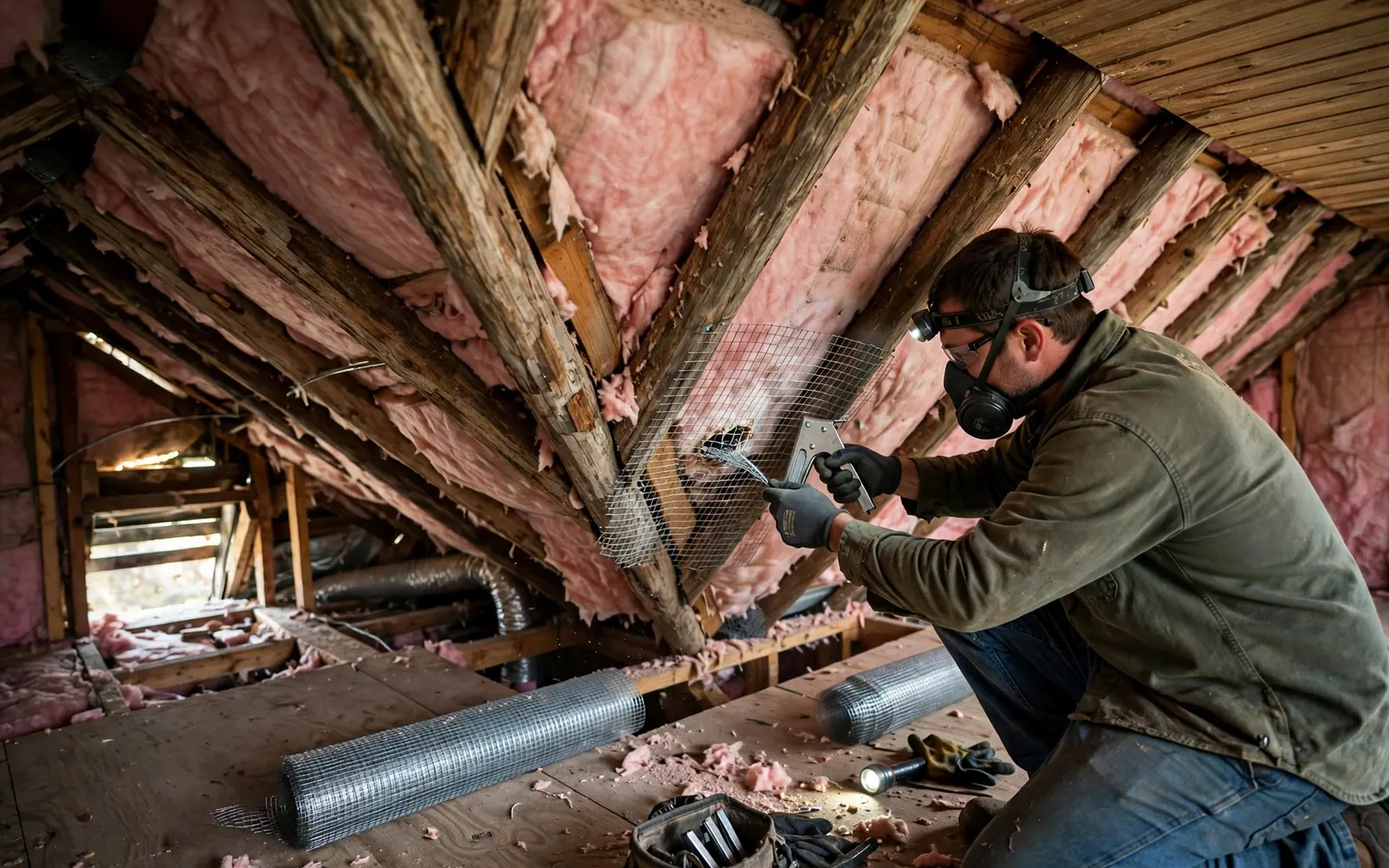
Exclusion means closing those openings with materials rodents cannot chew through, like galvanized hardware cloth, metal flashing, and concrete where it fits. We seal after removal is underway and we confirm the attic is clear, because sealing animals inside is worse than not sealing at all. Done in the right order, exclusion is what turns a one-time trapping job into a permanent fix.
The Risks Rats Leave Behind
Rodents in an attic are not just a noise problem. They gnaw constantly to keep their teeth worn down, and wiring is on the menu. Gnawed electrical wiring in a hot Florida attic is a genuine fire risk, and it is one of the main reasons attic infestations should not wait. They also shred insulation for nesting, which hurts your cooling bills in a Lakeland summer, and their urine and droppings contaminate insulation and stored items below.
Cleanup matters after the animals are out. We can advise on attic cleanup, including removing contaminated material and disinfecting affected areas, and on what can simply be vacuumed and sealed away safely. We also talk through food storage and yard changes, like picking up fallen citrus and moving bird feeders, that stop advertising your home to the next wave of roof rats.
- Gnawed wiring raises the risk of an attic fire
- Shredded, contaminated insulation drives up cooling costs
- Droppings and urine require proper cleanup after removal
- Fallen fruit and pet food outdoors keep drawing new rats
Our Approach to Bait, Traps, and Your Household
Inside a home, trapping is usually the better tool. It lets us confirm what was caught, avoids an animal dying in a wall void, and keeps control of the process around kids and pets. Outside, any bait use goes in secured stations placed with care, and we explain every choice up front. We will never scatter product without telling you exactly where it is and why.
Timing matters as well. Roof rats are cautious with new objects, so traps may sit quiet for a few nights before they start working. That is normal rodent behavior, not a failed plan. We check and adjust trap placement on follow-up visits, confirm activity has stopped by sound, signs, and monitoring, and only then finish the last of the sealing. You will know what stage your home is at after every visit.
How our rodent control service works
- Step 1
Call and Describe the Signs
Noises, droppings, chewed items, or a sighting all help. We confirm a free quote on the call and book an inspection, often same-day or next-day.
- Step 2
Roofline, Attic, and Foundation Inspection
We find the entry points, identify the rodent by droppings and runways, and check the attic for nesting, damage, and gnawed wiring. You see photos of what we find.
- Step 3
Removal, Then Exclusion
We set traps suited to the species and the space, return to check and reset them, and seal entry points with chew-proof materials once the attic is clear.
- Step 4
Cleanup Guidance and Prevention
We advise on attic cleanup and disinfecting, plus the yard and storage changes that keep roof rats from targeting your home again.
Questions before you book? Call us — a two-minute conversation usually settles it.
Ready to sort out your rodent control problem?
Free quote, straight answers, and a price confirmed before any work starts. Most appointments are same-day or next-day.
Related services
Rodent Control across the Lakeland area
Rodent Control questions, answered
How do roof rats get into Lakeland attics?
They climb palms, citrus trees, fences, and utility lines onto the roof, then enter through soffit gaps, plumbing vents, AC line openings, and roof joints. Trimming branches back from the roof and sealing those gaps removes both the highway and the door.
I hear scratching at night. How fast should I act?
Soon. Night noises in the attic usually mean an active nest, and rats chew wiring and insulation the whole time they are up there. An inspection within a few days keeps a small problem from becoming an expensive one.
Why not just use poison?
Inside a home, poison can leave a dead rat in a wall or attic where it cannot be reached, and it gives you no confirmation of what was caught or when the problem ended. Trapping plus sealing entry points gives a cleaner, more permanent result for most homes.
Will sealing my home keep rodents out for good?
Exclusion is the closest thing to a permanent fix, because it removes the way in. Rats can still test the home, and new gaps can appear as a house settles, so a yearly look at the roofline and vents is smart. We will show you the spots to watch.
Do you clean the attic after the rats are gone?
We advise on cleanup as part of the plan, including dealing with droppings, contaminated insulation, and disinfecting. The scope depends on how long the rats were active, and we will be honest about what your attic actually needs.