Wasp and Bee Removal in Lakeland, FL
A wasp nest under the eave by your front door changes how you use your own house. You start going through the garage. Guests get warned at the sidewalk. In Lakeland, wasps build fast in spring and summer, and a nest that was the size of a golf ball in May can hold a lot of angry wasps by August. Getting close with a can from the hardware store is how people get stung.
Same-day and next-day appointments, Mon–Sat
Swan City Pest removes wasp nests and handles bee calls with care. Some stinging insects are aggressive and need removal. Some are harmless and can be left alone. Honey bees are a different case again, and we will walk you through which one you have. If it is a honey bee colony, we refer it for live removal by a beekeeper instead of spraying it.
Know Your Wasps, Daubers, and Bees
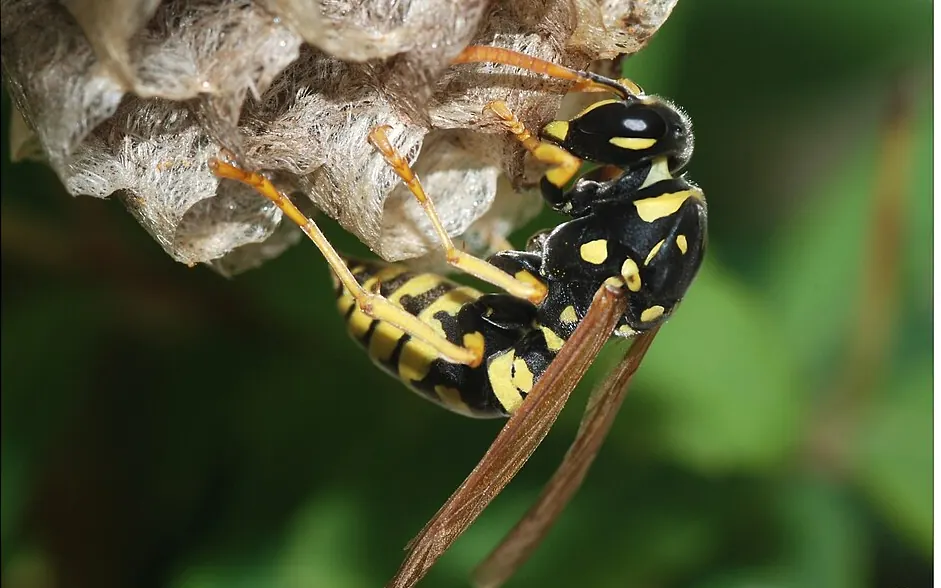
Paper wasps are the ones under eaves, porch ceilings, and fence rails, hanging from a papery, umbrella-shaped nest. They will sting if you bump the nest or get too close while mowing. Yellowjackets are meaner and often nest in the ground in old rodent holes or in wall voids. Step on an entrance hole and the whole colony can come out at once. They are also the wasps that harass cookouts and trash cans in late summer.
Mud daubers look scary but are mostly harmless. They build small mud tubes on walls and rarely sting. Carpenter bees are the big, slow bees hovering around porches in spring. The males cannot sting, but the females drill neat round holes in unpainted wood to lay eggs, and that damage adds up over seasons. We will identify what is at your home before suggesting anything, because daubers often need no treatment at all.
- Paper wasps: papery nests under eaves and porch ceilings
- Yellowjackets: ground nests and wall voids, aggressive when disturbed
- Mud daubers: mud tube nests, rarely sting, often left alone
- Carpenter bees: drill into wood trim, decks, and fence posts
- Honey bees: colonies referred for live removal by a beekeeper
Honey Bees Get Relocated, Not Sprayed
If honey bees move into a wall, a water meter box, or a hollow tree at your Lakeland home, spraying them is the wrong move. A sprayed colony leaves behind honey, wax, and dead bees inside the structure, which draws ants, roaches, and other pests and can cause odor and staining. It also kills bees that local farms and gardens depend on. Swan City Pest refers honey bee colonies for live removal by a beekeeper, who can open the area, take the colony out alive, and advise on sealing the space.
Africanized bees exist in Florida, and large or defensive colonies are not a DIY job under any circumstances. If bees are pouring in and out of an opening, sound loud inside a wall, or react strongly when you are still several feet away, keep people and pets inside and call a professional. Do not plug the hole. Trapped bees will find another way out, often into the house.
How We Remove Wasp Nests Safely
We treat the nest itself, wait for activity to stop, and remove the nest material where it is reachable so wasps do not rebuild in the same sheltered spot. For ground nests, we mark the area so nobody mows or walks over it before the visit. For nests in wall voids, we explain the options carefully, since opening a wall is sometimes the cleaner fix in the long run.
Timing helps. Wasp work early in the season, when nests are small, is faster and lower risk than waiting until a colony is at full size in September. Check eaves, shutters, play sets, and mailbox posts every few weeks in spring. Knocking down a brand-new paper nest base early, before wasps settle, can prevent a nest, but once wasps are active on it, leave it to us.
Cutting Down Repeat Nests Around Your Home
Wasps pick the same kinds of spots year after year: sheltered eaves, the undersides of railings, hollow fence posts, and gaps behind shutters. After removal, we point out the spots that keep getting chosen and simple fixes like sealing hollow rails, repairing screens, and keeping sweet drinks and pet food from sitting out on the porch during peak season.
- Check eaves and porch ceilings in spring while nests are small
- Seal hollow fence posts and open rail ends
- Keep lids on outdoor trash and clean up drink spills
- Repair torn screens and gaps around utility openings
- Call early instead of waiting for a full-size late-summer nest
How our wasp & bee removal service works
- Step 1
Identify the insect
We confirm whether you have paper wasps, yellowjackets, daubers, carpenter bees, or honey bees, since each gets a different answer.
- Step 2
Set a safe work area
We keep kids, pets, and neighbors clear, mark ground nest entrances, and pick a time when activity is low.
- Step 3
Treat and remove the nest
We treat the colony at the nest, then remove reachable nest material so the spot is less likely to be reused.
- Step 4
Advise on next steps
You get clear guidance on sealing and prevention, or a live-removal referral if your bees turn out to be a honey bee colony.
Questions before you book? Call us — a two-minute conversation usually settles it.
Ready to sort out your wasp & bee removal problem?
Free quote, straight answers, and a price confirmed before any work starts. Most appointments are same-day or next-day.
Related services
Wasp & Bee Removal across the Lakeland area
Wasp & Bee Removal questions, answered
Will you spray a honey bee hive in my wall?
No. We refer honey bee colonies for live removal by a beekeeper. Spraying a colony inside a wall leaves honey and wax behind that attracts other pests and causes bigger problems later. Live removal takes the bees and comb out together.
I found a nest in the ground. What should I do until you arrive?
Keep people and pets away and do not mow over it. Mark the spot from a distance if you can do it safely, and do not pour anything into the hole. Ground nests are usually yellowjackets, and they defend the entrance hard when it is disturbed.
Are mud daubers dangerous?
Not really. Mud daubers rarely sting and they hunt spiders. Their mud tubes look messy on a wall, but many Lakeland homeowners leave them alone. If tubes are in a bad spot, we can remove them and talk through simple ways to discourage rebuilding.
How do I stop carpenter bees from drilling my porch?
Painted or sealed wood is far less attractive to them than bare, weathered wood. Fill old holes after the bees are gone so they are not reused. We can treat active holes and point out the boards they favor most around your home.
How fast can you remove a wasp nest?
We often have same-day or next-day availability, and active nests near doors, pools, and play areas get priority. Call for a free quote over the phone and describe where the nest is so we come prepared.