Termite Inspection in Lakeland, FL
Most people meet the termite inspection at the worst possible moment: in the middle of buying or selling a house, with a closing date coming at them fast. Lenders, especially on VA and FHA loans, often require a Wood-Destroying Organism inspection, known as a WDO inspection, before they will fund. In Florida that report goes on the official FDACS-13645 form, and it has to reflect a real, careful look at the home, not a quick walk-through with a clipboard.
Same-day and next-day appointments, Mon–Sat
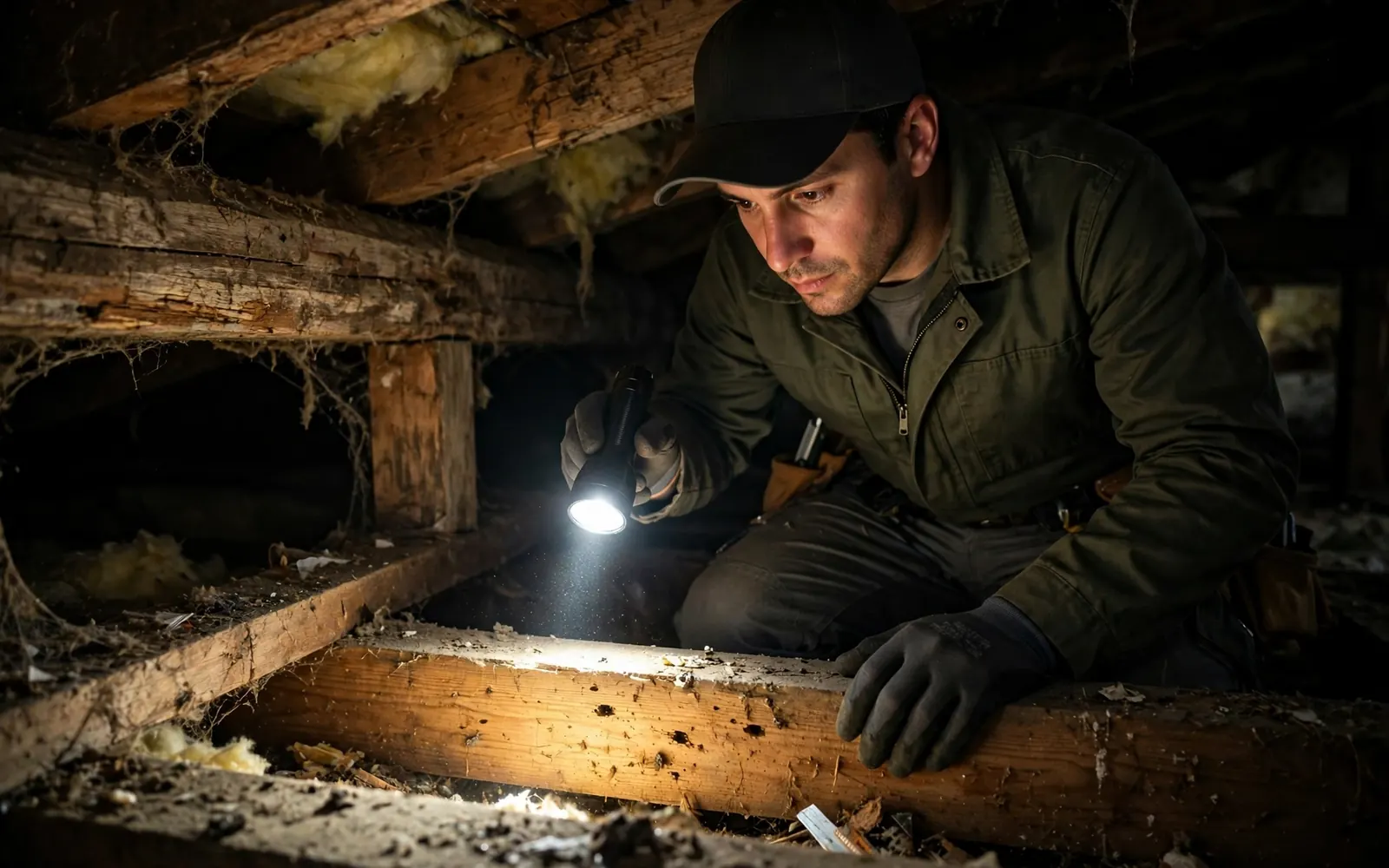
Swan City Pest does WDO inspections for Lakeland buyers, sellers, and agents, and straight termite inspections for homeowners who just want to know where they stand. We check the places termites and other wood-destroying organisms actually show up, explain what we found in normal language, and get the paperwork back to you promptly so a closing does not stall. Your quote is confirmed free on the call, and same-day or next-day slots are often open.
What a WDO Inspection Actually Covers
A WDO inspection looks for visible evidence of wood-destroying organisms, past and present. That covers subterranean termites, drywood termites, wood-boring beetles, and wood-decay fungi. The inspector is looking for live insects, frass, mud tubes, damaged wood, shed wings, and signs of earlier treatment or repairs. What it finds, or does not find, goes on the FDACS-13645 form exactly as observed on that day.
Just as useful is what the form is not. It is not a guarantee that a home has no hidden damage, and it does not cover areas the inspector cannot see or reach, like inside finished walls. An honest inspector will tell you that up front. What the report does give a buyer and a lender is a clear, dated record from a proper inspection of every accessible area.
- Subterranean and drywood termites, live or old evidence
- Wood-boring beetles and wood-decay fungi
- Mud tubes, frass, wings, and probed, damaged wood
- Signs of past treatment, repairs, and conducive conditions
Where We Look in a Lakeland Home
We work the home from the outside in. Outside means the full foundation line, siding, eaves, window and door frames, wood decks, fences touching the house, and any wood stacked against it. Garages get a close look because the walls are often unfinished and the slab edge is exposed, which makes mud tubes easy to spot there first. Inside, we check baseboards, closets, under sinks, around tubs and water heaters, and the attic for frass, tubes, and damaged trusses or sheathing.
Moisture gets special attention in Florida. A slow plumbing leak or a roof leak does two jobs at once: it softens wood so fungi can take hold, and it gives subterranean termites the damp conditions they want. Around Lakeland lakes and in older neighborhoods, homes that have had water issues deserve an extra careful pass, and we take it.
Buying, Selling, or Refinancing in Polk County
If you are buying, the inspection protects you from inheriting a repair bill nobody mentioned. Termite damage in a Lakeland home can range from a single soft baseboard to studs and flooring that need real work, and you want to know which one it is before you sign. If you are selling, getting the inspection done early gives you time to treat a problem or fix a small issue on your own schedule instead of under closing pressure.
Agents across Polk County know the drill: the report has to be on the right form, completed properly, and delivered in time. We keep the process simple. Book the visit, give us access details, and we handle the rest, then send the completed FDACS-13645 to whoever needs it. If we do find active termites, we can quote the treatment too, but there is no pressure to use us for that part.
Homeowner Inspections Outside a Sale
You do not need a real estate deal to justify an inspection. Plenty of Lakeland homeowners call because they found wings on a sill, pellets under a window, or a soft spot in a door frame and want a straight answer. A homeowner inspection covers the same ground as a WDO visit. The only difference is the paperwork: instead of the state form, you get our findings and recommendations directly.
Yearly checks make sense in Central Florida even when nothing looks wrong. Colonies work quietly, and the cheapest termite problem is always the one caught in its first year. If your home has never been inspected, or it has been several years, that alone is reason enough to book one.
How our termite inspection service works
- Step 1
Book and Tell Us the Deadline
Call with the property address and your closing or inspection deadline if there is one. We will confirm a free quote and find a same-day or next-day slot when possible.
- Step 2
We Inspect Every Accessible Area
The technician works through the exterior, garage, interior, and attic, probing suspect wood and photographing evidence so findings on the form are backed up.
- Step 3
You Get the FDACS-13645 Report
For sales and loans, we complete the official Florida WDO form and send it to you or your agent promptly. Homeowners get a clear written summary instead.
- Step 4
Clear Next Steps, No Pressure
If we found activity or damage, we explain what it means and quote any treatment separately. If the home is clean, you have a dated record that says so.
Questions before you book? Call us — a two-minute conversation usually settles it.
Ready to sort out your termite inspection problem?
Free quote, straight answers, and a price confirmed before any work starts. Most appointments are same-day or next-day.
Related services
Termite Inspection across the Lakeland area
Termite Inspection questions, answered
What is a WDO inspection, and do I need one?
WDO stands for Wood-Destroying Organism. It is the inspection Florida uses for real estate deals, reported on form FDACS-13645. VA and FHA loans commonly require it, and many conventional lenders and buyers ask for one too.
How long does a termite inspection take in Lakeland?
Most single-family homes take about 45 minutes to an hour and a half, depending on size, attic access, and how much there is to look at. We would rather take the time and do it right than rush a report your lender depends on.
What happens if the inspection finds termites?
The activity is documented on the form, and the seller and buyer work out how to handle it, often with treatment before closing. We can provide a treatment quote, but using us for that work is entirely your choice.
Can an inspection miss hidden termites?
Any visual inspection can only report on areas that can be seen and reached. Termites inside finished walls may leave no visible sign. We check thoroughly, explain those limits honestly, and note inaccessible areas on the report.